Course Summary
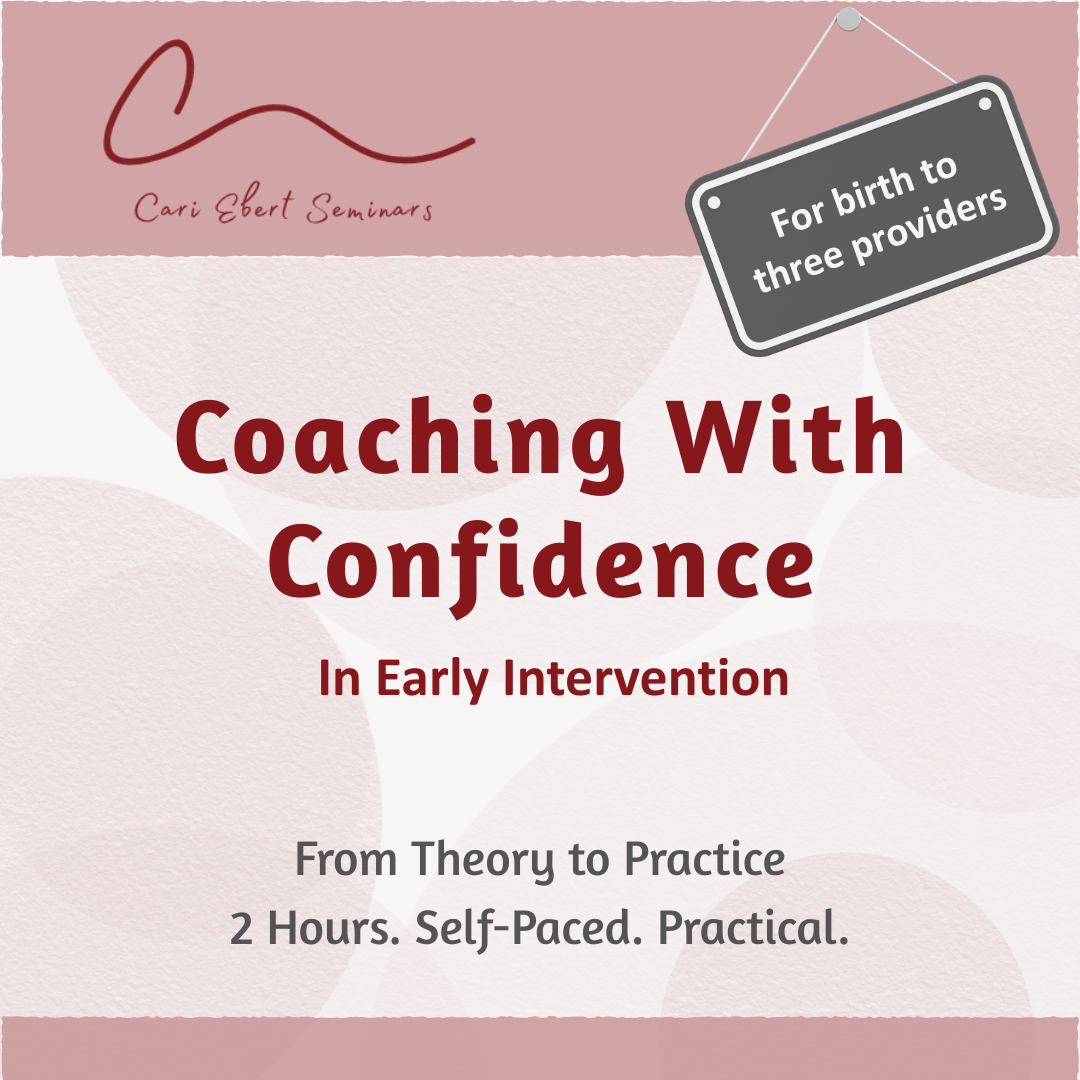
There is strong evidence supporting the use of coaching during Early Intervention sessions, yet many providers struggle to implement this evidence-based approach with confidence and consistency. Coaching represents a significant shift from traditional therapy models. In early intervention, therapy often looks different from the direct, child-focused services that many therapists were trained to provide. Instead of working directly with the child while caregivers observe, providers use coaching strategies to help caregivers embed learning opportunities throughout the day. Effective coaching requires a strong understanding of child development across all five developmental domains, well-developed adult-focused communication skills, and a clear understanding of how to provide routines-based intervention.
This 2-hour course provides practical, actionable strategies for helping families support children’s learning and development through everyday routines and interactions. Participants will learn how to partner more effectively with caregivers to build their confidence and competence in supporting their child’s development throughout the day, rather than relying on providers to “fix” deficits or teach “missing” skills.
While the iconic toy bag is often associated with Early Intervention, providers will explore the rationale for moving beyond this familiar safety net. Bagless sessions shift the focus from materials to high-quality interactions between caregivers and children, embedding learning opportunities into the routines children experience every day.
Learner Outcomes:
As a result of this training, participants will be able to:
1. Contrast the adult learning approaches of coaching and consulting.
2. Describe how EI therapists (PT, OT, SLP) deliver skilled therapy services through caregiver coaching within everyday routines.
3. List five strategies providers can use to actively involve parents and caregivers in Early Intervention (EI) sessions.
4. Outline strategies for supporting caregivers when follow-through on the joint plan is inconsistent.
5. Explain the rationale for bagless EI sessions.

Speaker Bio:
Cari Ebert, MS, CCC-SLP is a pediatric speech-language pathologist and Early Intervention provider with more than 25 years of experience supporting young children and their families. She lives and works in the Kansas City, Missouri area. Cari earned her bachelor’s degree from the University of Iowa in 1993 and her master’s degree from Southern Illinois University Carbondale in 1995. Cari is a therapist, consultant, author, product developer, and internationally recognized speaker who gets paid to do what she loves most—TALK! Known for her animated personality and engaging style, she brings high energy, practical strategies, and real-world insights to every presentation. As the parent to an Autistic son, Cari connects with audiences not only as a professional with decades of experience, but also as a parent of a neurodivergent child.
Disclosures:
Nonfinancial Disclosure: Cari has an Autistic son and shares personal experiences in her trainings.
Financial Disclosure: Cari receives financial compensation for presenting this course.
Audience:
This course is designed for early intervention providers and service coordinators who support infants, toddlers, and their families under Part C of the Individuals with Disabilities Education Act (IDEA).
Timed Agenda:
5 minutes: Introduction and disclosures
10 minutes: Contrasting Early Intervention (EI) service delivery models
15 minutes: How therapists deliver services in EI
60 minutes: Five coaching strategies to actively engage caregivers
15 minutes: Supporting caregivers when follow-through is inconsistent
10 minutes: Rationale for bagless EI sessions
5 minutes: Wrap-up
ASHA CEUs are not provided for this course, however, you will receive a certificate of completion for 2 Contact Hours or 0.2 Professional Development Hours(PDH), which count toward CCC maintenance. You can find more information from ASHA about PDHs here.
Refund Policy
- If a student orders and completes at least 15%, but no more than 30%, of the course and is dissatisfied with the material, then a refund will be considered on a case by case basis. The student will be required to state their specific issues with the course as it relates to their profession for a refund to be considered.
- If a student completes more than 30% of a course, there will be no refund.
- If a student fails to complete the course within the 120 day time period, there will be no refund.
- If a student purchases a course but never starts it within the 120 day time period for any reason, there will be no refund.
- If a student completes a course but fails to print their certificate of completion, there will be no refund. A certificate of completion will be issued to the student after verifying that the course was completed.